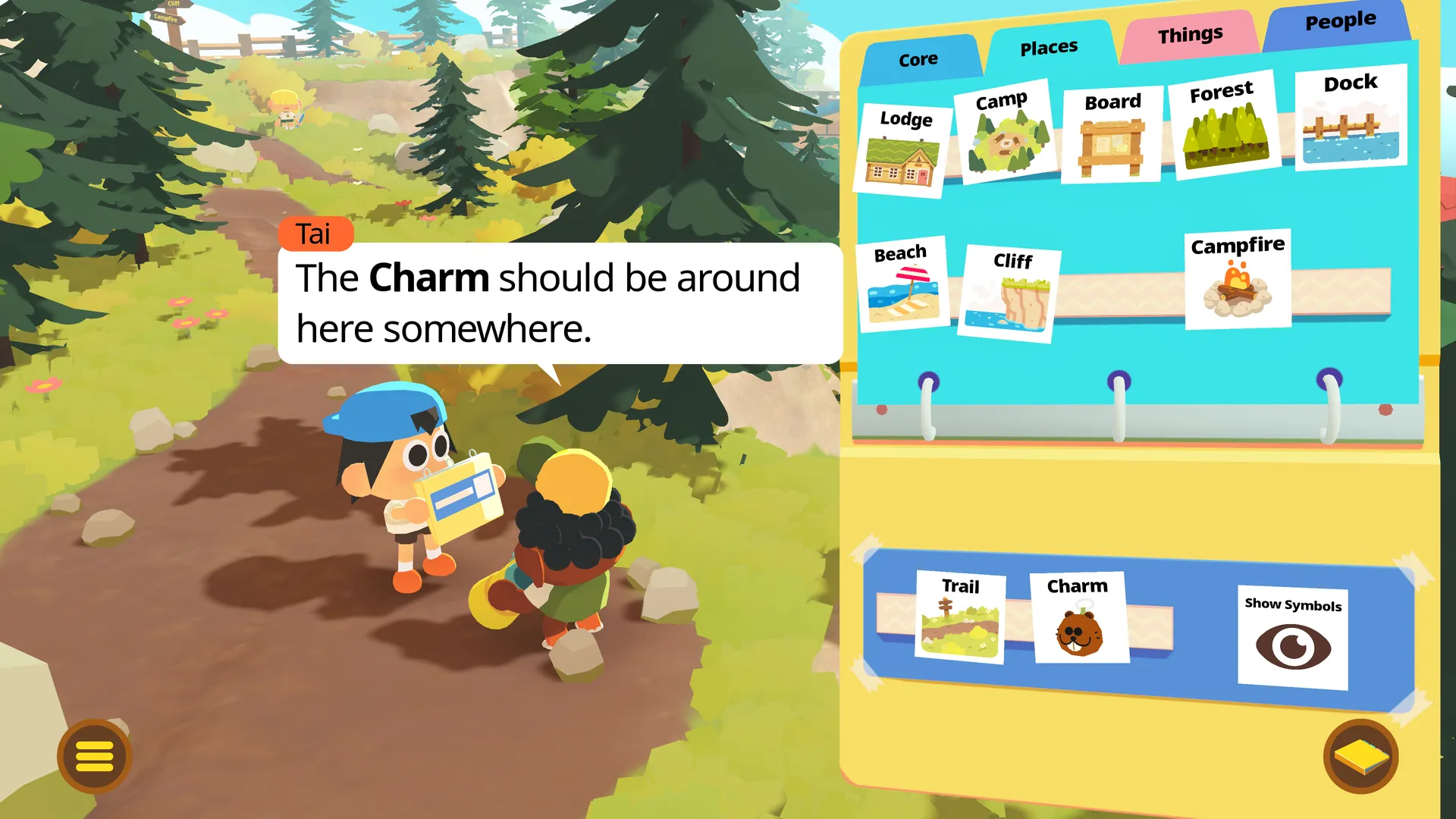
A cozy summer camp adventure made by two dads, featuring a non-speaking protagonist and mechanics built around real-world communication tools.
| Fast Facts | Find Your Words |
|---|---|
| Developer | Capybara Games |
| Release | April 2026 |
| Platform | PC (Steam) |
| Price | Free (Supporter Edition available) |
| ESRB Rating | Not yet rated (We expect E or E10+) |
| Best For | Ages 8 and up |
| Themes | Communication, friendship, inclusion, summer camp |
What Is Find Your Words?

Find Your Words is an upcoming narrative adventure game from Capybara Games, the Canadian studio behind Superbrothers: Sword and Sworcery and Grindstone. Unlike anything else on the radar for 2026, this one was built by two of the studio’s dads, John and Vic, specifically to celebrate children who find their voices in ways that look different from everyone else around them.
The game is set at a summer camp designed for children who use AAC, which stands for Augmentative and Alternative Communication. These are the real-world tools, devices, and strategies that non-speaking or minimally speaking individuals use to communicate, from symbol-based communication binders to speech-generating devices. If you have a child who uses AAC, or you’ve never heard the term before, this game is likely the most thoughtful introduction to that world you’ll find in any interactive format.
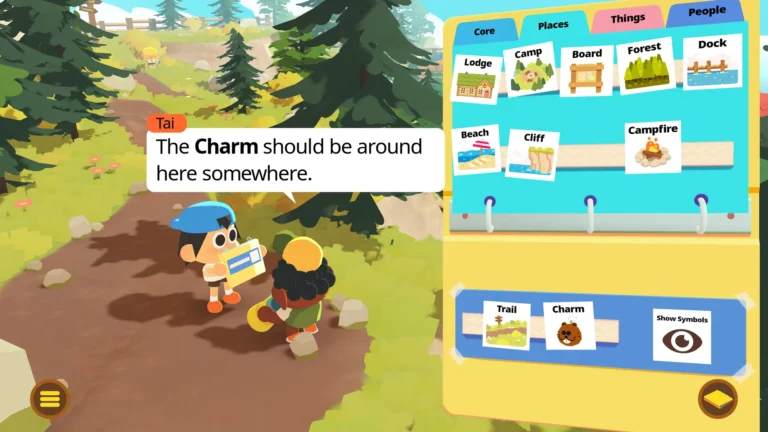
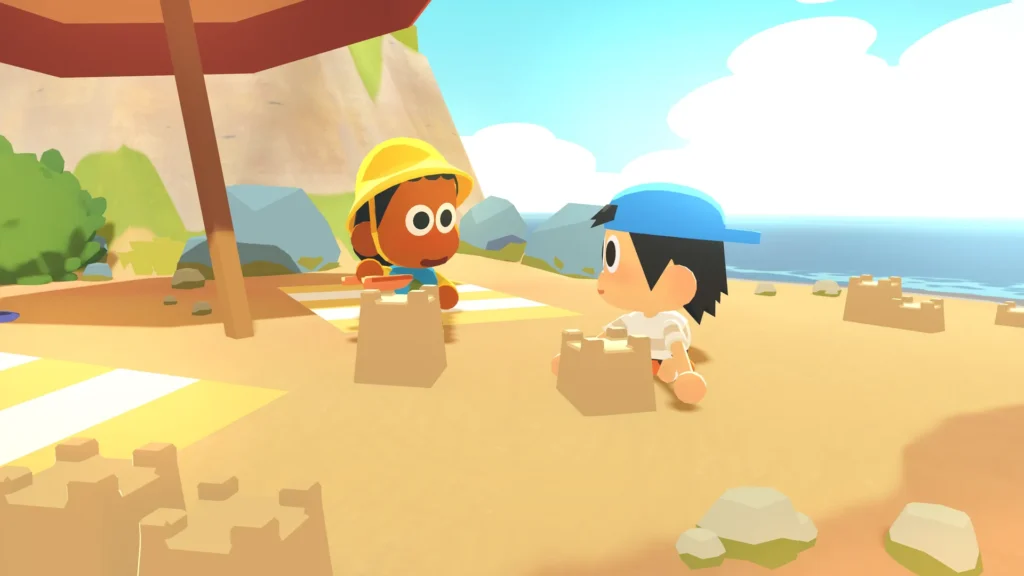
You play as Sandy, a non-speaking camper who communicates through gestures and a communication binder. Instead of the usual dialogue options you’d see in any other game, you interact with other campers by selecting word tiles and symbols from your binder, just the way a real AAC user would. Building your vocabulary means opening up new conversations, new activities, and deeper friendships.
What Is AAC?
AAC stands for Augmentative and Alternative Communication. It refers to any method of communication used by people who have difficulty with spoken speech.
Augmentative: Supplements existing speech (for example, using a picture board alongside spoken words).
Alternative: Replaces speech entirely for those who are non-speaking.
AAC tools range from simple printed picture boards (low-tech) to sophisticated apps and devices that generate speech through touch, eye tracking, or head sensors (high-tech). AAC is used by people with autism, cerebral palsy, Down syndrome, ALS, and many other conditions. Research consistently shows that introducing AAC does not discourage speech development and often supports it.
Who Made This Game and Why?
Capybara Games is best known for stylish, experimental titles, but Find Your Words represents something different for the studio. Two of the team’s developers, John and Vic, created the game as a personal project rooted in their own experiences as dads of children who communicate differently.
Vic also serves as one of the lead artists (he previously contributed to Grindstone’s distinctive visual style), and the game’s soundtrack is composed by Far, one of Capybara’s producers. Two of the playable characters at the camp are directly inspired by the creators’ own sons, Harry and Oscar.
That personal origin shows in the design. This is not a game that treats AAC as a quirky mechanic or uses disability as a dramatic backdrop. The communication binder at the center of the gameplay is modeled directly on real-world AAC tools. The summer camp setting was chosen specifically because it reflects a real type of experience that exists for children who use AAC.
How Does the Gameplay Work?
The game’s main loop is about building relationships. As Sandy, you arrive at camp surrounded by other children, each with their own personality, interests, and way of engaging with the world. Your job is to get to know them.
Rather than selecting from a list of pre-written dialogue responses, you build your communication by choosing word tiles and symbols from your binder. As your vocabulary grows, new conversational pathways and activities become available. The developers describe the goal as deepening relationships, not collecting items or completing combat missions.
Activities are tailored to each camper’s interests and designed to be short and easy to drop in and out of. The confirmed list includes:
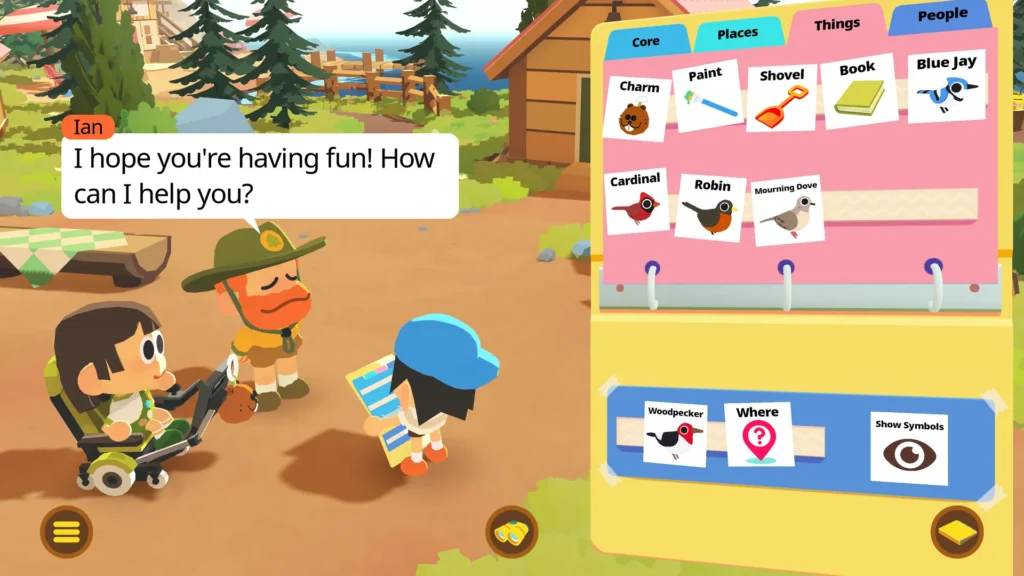
- Bird watching with a camper named Ty, who logs bird sightings using binoculars
- Painting with Gwenny, helping her find inspiration around camp
- Hide-and-seek with a camper who favors hiding in cardboard boxes (a nod to Metal Gear Solid that parents who grew up gaming in the 90s will immediately recognize)
- Scavenger hunts with a character named Sy, solving clues to find locations
- Camp dances and social events
The developers cited Animal Crossing as an influence, but noted a key difference in intention: where Animal Crossing rewards players largely for collecting and accumulating, Find Your Words keeps the focus on the social substance of camp life. A Short Hike, another beloved indie game about a calm outdoor adventure with gentle character interactions, was also mentioned as a touchstone.
Is This Game Appropriate for Kids?
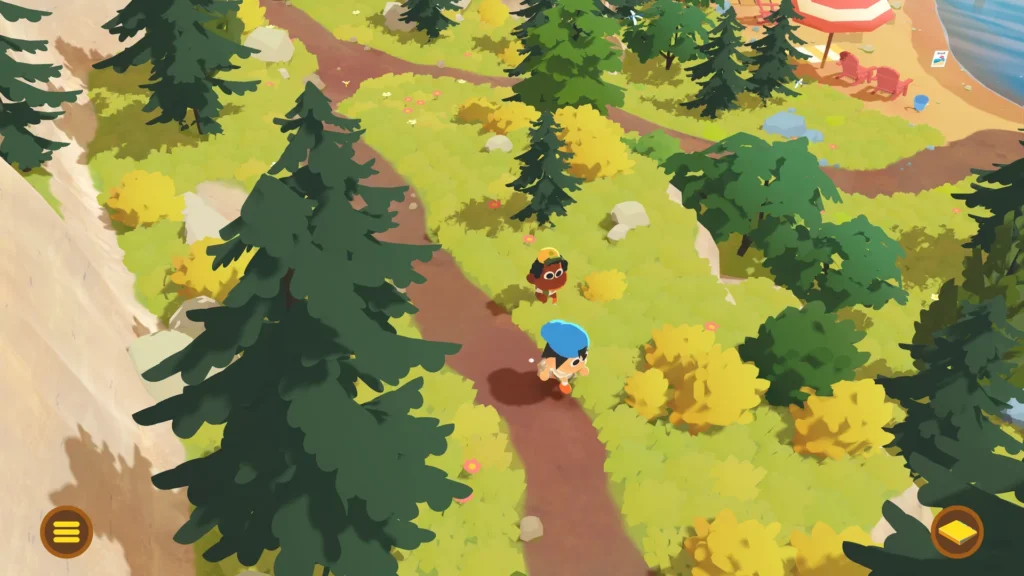
Based on everything shown so far, Find Your Words is designed to be a genuinely family-friendly experience. The ESRB has not yet assigned an official rating at the time of this preview, but the content and tone strongly suggest an Everyone or E10+ rating upon release.
There is no combat. The setting is a summer camp. The themes are communication, friendship, inclusion, and self-expression. The target audience appears to be children and families, particularly those with personal connections to AAC, special education, or non-speaking individuals.
Parent Note: What This Game Models for Kids
Find Your Words offers something genuinely rare: a story where the main character communicates differently, and that difference is treated as simply part of who they are, not a problem to be solved.
For children who use AAC themselves, this is meaningful representation. For children who don’t, it’s a gentle, engaging introduction to how some of their peers communicate and why those tools matter.
The AAC mechanics are not simplified to the point of being inaccurate. They reflect how communication binders actually work, which means kids who engage with this game are learning something real about the world.
Sidebar: What Does AAC Actually Look Like in Real Life?
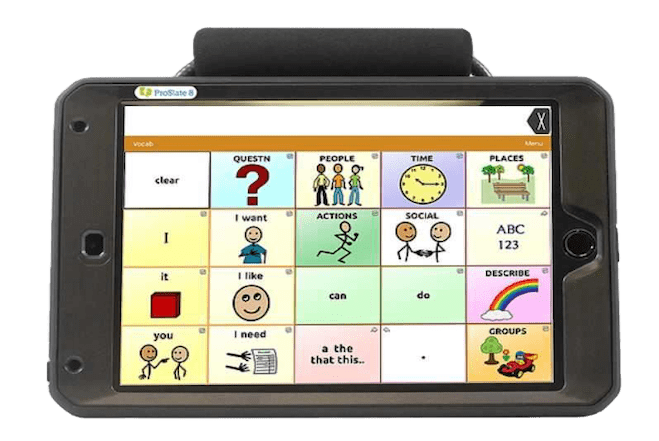
Because this game puts AAC at its center, it’s worth giving parents a quick overview of what these tools actually are, since many families encounter the term for the first time through a game or show.
Unaided AAC
- These systems rely entirely on the user’s body with no external tools:
- Gestures and body language
- Manual sign languages (such as ASL)
- Finger spelling
Aided AAC
These systems require an external tool or device:
- Low-tech: Communication binders, printed picture boards, and symbol books. This is exactly the type of tool Sandy uses in Find Your Words.
- Mid-tech: Simple electronic devices that play pre-recorded speech when a button is pressed.
- High-tech: Speech-generating devices, often tablets or specialized computers controlled by touch, eye tracking, or head sensors.
AAC is used by individuals with autism, cerebral palsy, Down syndrome, ALS, and many other conditions. It can be a permanent primary communication method or a temporary support, such as after surgery or a medical procedure. A common misconception is that introducing AAC will prevent a child from developing natural speech. Research consistently shows the opposite: providing AAC reduces communication frustration and often supports speech development rather than replacing it.
When Can You Get Find Your Words and What Does It Cost?
Find Your Words is scheduled to launch in April 2026 on PC via Steam. It is currently available to wishlist on Steam.
Capybara Games has made a notable decision about pricing: the base game will be released for free. The studio’s stated reason is that they want to maximize access and awareness around AAC, and a free release removes any barrier for families who might benefit most from the game.
A paid Supporter Edition will be available for players who want to contribute to the developers. Specific pricing for the Supporter Edition has not been announced at this time.
Should Your Family Play This?
If you have a child who uses AAC, this is an easy recommendation. Finding a game where the protagonist communicates the way your child communicates is not something that happens often. The care the developers put into modeling real AAC tools means the representation is accurate, not cosmetic.
If AAC is not part of your family’s day-to-day life, this game still has real value. It offers children a low-stakes, engaging way to spend time with a character who is different from most game protagonists, and to understand intuitively what communication through a binder actually feels like. That kind of exposure matters, particularly for children who will share classrooms with AAC users as they get older.
And honestly, the game just looks lovely. The art is warm and detailed, the activities are designed to be relaxed and fun, and the summer camp setting has wide appeal. You don’t need a personal connection to AAC to enjoy a good cozy game about making friends.
We will have a full review when the game releases in April 2026.
About The Author