
Plain-English Definitions for the Terms Your Kids Use Every Day
Your child is talking about shiny hunting, EV training, their Pokedex, or which Generation their favorite Pokemon is from, and you have no idea what any of it means. This glossary exists for you. Every term is defined in plain language, with a note about why it matters as a parent where relevant. Terms are organized by category so you can find what you need quickly.
You do not need to memorize any of this. Think of it as a reference you can come back to when your kid says something that sounds like a foreign language.
The Basics: What Pokemon Actually Is
Start here if you are completely new to Pokemon.
Pokemon (the franchise)

Pokemon is a media franchise owned jointly by Nintendo, Game Freak, and Creatures Inc. It began in Japan in 1996 as a pair of Game Boy video games and has since expanded to include video games, a Trading Card Game, an animated TV series, movies, and merchandise. It is currently the highest-grossing media franchise in history, ahead of Hello Kitty and Star Wars.
Why it matters: The Pokemon your child loves today is the same franchise that was popular when many parents were kids themselves in the late 1990s. The core appeal, collecting creatures, training them, and battling, has remained consistent for nearly 30 years.
Game Freak

Game Freak is the Japanese video game studio that creates and develops the mainline Pokemon video games. It was founded by Satoshi Tajiri, who came up with the original concept for Pokemon based on his childhood hobby of collecting insects. Game Freak is one of three companies that jointly own the Pokemon franchise.
The Pokemon Company (TPC)

The Pokemon Company is the organization that manages the Pokemon brand across all its products, video games, the Trading Card Game, the animated series, movies, and licensing. It was established in 2000 to handle the growing complexity of the franchise. The Pokemon Company International (TPCi) manages the brand outside of Asia.
Pokemon (the creatures)
Pokemon are the fictional creatures at the center of the franchise. The name is short for ‘Pocket Monsters.’ Players catch, train, and battle them. There are currently over 1,000 individual species, each with its own name, design, and set of abilities. The original 151 Pokemon (including Pikachu, Charizard, and Mewtwo) are still the most widely recognized.
Trainer
In the Pokemon world, a Trainer is a person who catches and battles with Pokemon. The player character in every Pokemon game is a Trainer. When your child says ‘my Trainer’ or ‘my character,’ they are referring to the avatar they control in the game.
Games and Generations
Pokemon games are released in cycles called Generations. Understanding this helps make sense of which games your child is playing and what is current.
Generation (Gen)
A Generation in Pokemon refers to a distinct era of the franchise defined by a new set of Pokemon species and a new game world (called a Region). Each new Generation introduces new Pokemon, new games, and typically new gameplay mechanics. There have been nine Generations so far, starting with Generation 1 in 1996 and the most recent being Generation 9 (Pokemon Scarlet and Violet, 2022). When your child says ‘Gen 1’ or ‘Gen 2,’ they are referring to specific eras of the franchise with specific Pokemon.
Why it matters: Knowing which Generation your child is interested in helps you understand what games they want and whether those games are current or older titles.
Mainline Games
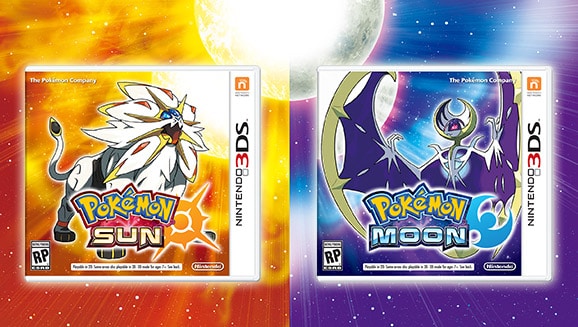
The mainline Pokemon games are the core RPG (role-playing game) titles developed by Game Freak. These are the primary games in the franchise, titles like Pokemon Red and Blue, Gold and Silver, Sword and Shield, and Scarlet and Violet. They are distinct from spin-off games like Pokemon GO or Pokemon Snap, which have different gameplay styles.
Region
Each Pokemon game takes place in a fictional Region, a unique world with its own geography, cities, and Pokemon species. Regions are typically inspired by real-world locations. For example, Kanto (Generation 1) is based on a part of Japan, Unova (Generation 5) is based on New York City, and Galar (Generation 8, Sword and Shield) is based on Great Britain. When your child mentions a Region name, they are describing which game world they are playing in.
Version Exclusives
Most Pokemon games are released as two versions simultaneously, for example, Pokemon Scarlet and Pokemon Violet, or Pokemon Sword and Pokemon Shield. The games are nearly identical, but each version contains a small number of Pokemon that can only be found in that specific version. This is a deliberate design choice to encourage players to trade with friends who have the other version. When your child asks for a specific version, this is often why.
Why it matters: This system has been in place since the very first games in 1996 and is one of the reasons trading with friends is built into the experience.
Remake
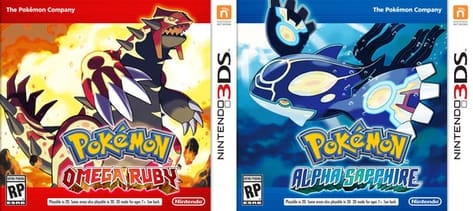
A Remake is a modernized version of an older Pokemon game, rebuilt with updated graphics and gameplay systems while keeping the same story and world. For example, Pokemon Brilliant Diamond and Shining Pearl (2021) are remakes of Pokemon Diamond and Pearl (2006). Game Freak has made remakes a regular part of their release cycle, allowing newer players to experience classic games on modern hardware.
Pokemon Legends: Arceus
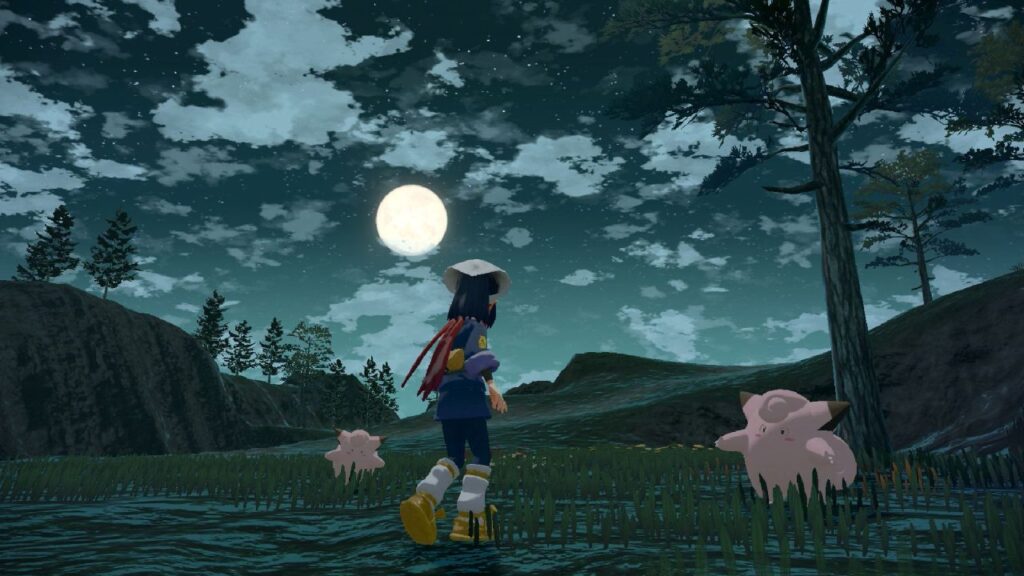
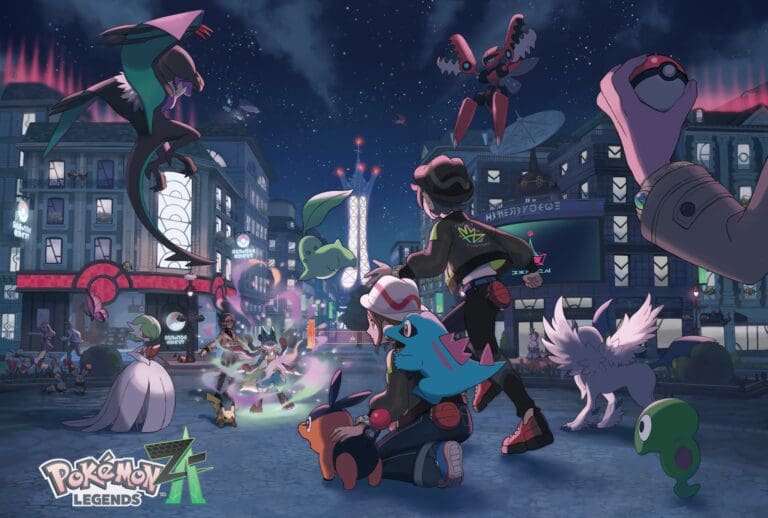
Pokemon Legends: Arceus (2022) is a mainline game that significantly changed the traditional Pokemon formula. Instead of the standard turn-based battles in tall grass, it placed players in open areas where they could observe and catch Pokemon in real time. It is set in a historical version of the Sinnoh region and is generally considered a major departure from the classic formula. It was well-received despite being quite different from typical Pokemon games. It was so successful that they released a seconods game in the Pokemon Legends series (Pokemon Legends: Z-A in 2025.)
Pokemon GO
Pokemon GO is a free-to-play mobile game developed by Niantic (not Game Freak) and released in 2016. It uses augmented reality and GPS to place Pokemon in the real world, encouraging players to walk around their neighborhood to find and catch them. It reached over 147 million monthly active users at its peak and has generated over $6 billion in revenue. It is free to download but contains in-app purchases.
Why it matters: Pokemon GO is one of the most common entry points for younger children into the Pokemon franchise. It has its own safety considerations around location sharing, meeting strangers at in-game locations, and in-app spending.
The Pokedex and Pokemon Species
Pokedex
The Pokedex is an in-game digital encyclopedia that records every Pokemon a player has seen or caught. Completing the Pokedex, catching one of every available Pokemon, is one of the core long-term goals of the games. The word ‘Pokedex’ is also used casually to refer to the total list of all Pokemon species in existence. When your child says they are ‘completing their Pokedex,’ they mean they are trying to catch every Pokemon available in their game.
Why it matters: Completing the Pokedex often requires trading with other players, since some Pokemon are Version Exclusives or can only be obtained through trading.
National Dex / Regional Dex
The Regional Dex is the list of Pokemon available in the specific region of the game your child is playing. The National Dex is the complete list of all Pokemon across all games and regions. Not every game includes the full National Dex, some limit which Pokemon are available. This is sometimes a point of frustration for dedicated fans who want access to all Pokemon.
Shiny Pokemon
A Shiny Pokemon is an extremely rare variant of a normal Pokemon that has a different color scheme. For example, a standard Gyarados is blue, but a Shiny Gyarados is red. Shiny Pokemon have no gameplay advantage. They are purely cosmetic. The base odds of encountering a Shiny in the wild are approximately 1 in 4,096. ‘Shiny hunting’ is the practice of deliberately searching for these rare variants, which can require hours or days of repetitive gameplay.
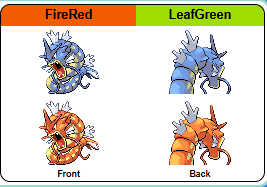
Why it matters: Shiny hunting is one of the more time-intensive activities in Pokemon. If your child is spending a very long time doing the same thing in a Pokemon game, they may be shiny hunting. It is harmless but can be a significant time commitment.
Legendary / Mythical Pokemon
Legendary Pokemon are exceptionally rare and powerful Pokemon that typically appear only once in a game and are tied to the main story. They are often very large or god-like in design, examples include Mewtwo, Ho-Oh, and Zacian. Mythical Pokemon are a subset that were historically only obtainable through special real-world events. Both categories are highly sought after by players.
Regional Variants (Alolan / Galarian / Paldean Forms)

Starting with Generation 7, Game Freak introduced Regional Variants, alternate versions of existing Pokemon that have evolved differently depending on the environment of their Region. For example, Meowth normally looks one way, but the Galarian Meowth has a different design and type. These variants often have different types and abilities from the originals, and collecting them is part of the modern Pokedex challenge.
Battles, Types, and How Combat Works
Pokemon battles are turn-based: each player selects a move, and the effects play out in order. Understanding types is the key strategic layer.
Type
Every Pokemon belongs to one or two Type (categories like Fire, Water, Grass, Electric, Psychic, or Dragon.) Types determine strengths and weaknesses in battle. A Water-type move is super effective against a Fire-type Pokemon. A Fire-type move barely affects a Water-type. There are 18 types in total. Understanding the type system is the foundational strategy skill of Pokemon battles.
Why it matters: The type system is essentially a large game of rock-paper-scissors. It is also genuinely good logic and pattern-recognition practice for kids.
Type Chart
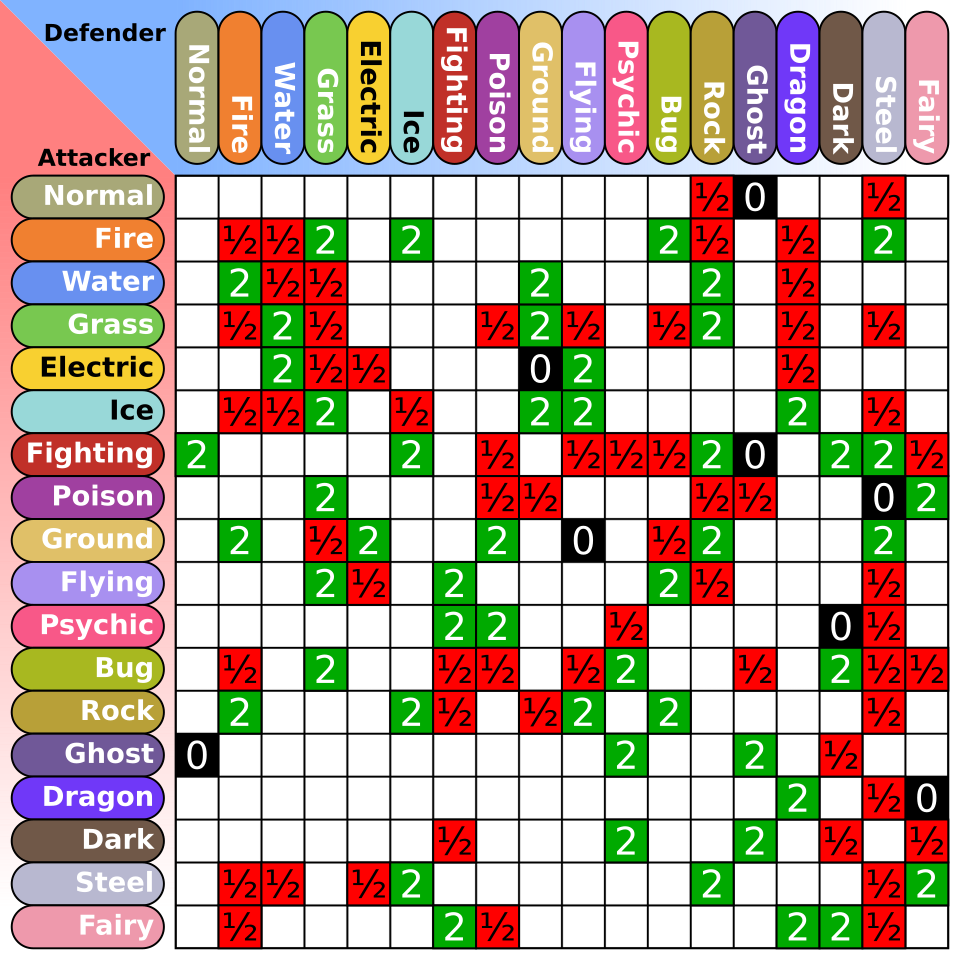
The Type Chart is a reference grid showing which types are effective against, neutral against, or weak to other types. It is one of the most referenced resources in the entire franchise. Experienced players have large portions of it memorized. Newer players look it up constantly. There are 18 types, so the chart has 324 individual matchup results.
Super Effective
When a move is ‘super effective’ against a Pokemon, it deals double damage because of a type advantage. If a move is super effective AND the attacking Pokemon’s type matches the move type, the damage is doubled again (this is called STAB or Same Type Attack Bonus). A super effective STAB move deals four times normal damage. You will hear your child say ‘it’s super effective’ regularly.
STAB (Same Type Attack Bonus)
STAB stands for Same Type Attack Bonus. When a Pokemon uses a move that matches one of its own types, the move deals 1.5 times its normal power. For example, a Fire-type Pokemon using a Fire-type move gets a STAB boost. This is a fundamental part of team-building strategy.
Moves / Attacks
Moves (also called attacks) are the actions a Pokemon can take in battle. Each Pokemon can know up to four moves at a time. Moves have types, power levels, accuracy ratings, and various effects. Managing which four moves a Pokemon knows is a key part of strategy. Some moves can be forgotten and replaced; others cannot be relearned once removed without special items.
Why it matters: If your child seems frustrated about forgetting a move, this is why. It can be a meaningful and sometimes irreversible decision.
TM / HM (Technical Machine / Hidden Machine)
TMs and HMs are items that teach a Pokemon a specific move. TMs have historically been single-use or unlimited-use depending on the game generation. HMs were moves tied to real-world actions like cutting down trees or surfing on water, they were required to progress through the game but took up one of a Pokemon’s four move slots, which frustrated players. HMs were phased out of the modern games starting in Generation 7.
Status Conditions
Status Conditions are negative effects that can be inflicted on a Pokemon during battle. The most common are: Burn (gradually loses HP and deals reduced physical damage), Poison (gradually loses HP), Paralysis (may be unable to move each turn), Sleep (cannot move until it wakes), and Frozen (cannot move until thawed). Managing status conditions is an important part of battle strategy.
Faint
A Pokemon faints when its HP (Hit Points) reaches zero. Fainted Pokemon cannot battle and must be healed at a Pokemon Center before they can fight again. In the main series games, Pokemon do not permanently die. Fainting is always reversible. This is distinct from some fan-made game modes (Nuzlocke) where players choose to treat fainting as permanent death.
Why it matters: If your child is upset about a Pokemon fainting, they are not losing the creature permanently. It is the equivalent of being knocked out and needing a rest.
Pokemon Center

A Pokemon Center is a free in-game healing location found in every town and city. Players visit Pokemon Centers to fully heal all of their Pokemon at no cost. The nurse at the desk is named Nurse Joy in the anime. There are no resource costs to healing. It is always free and always fully restores the team.
Stats, EVs, IVs, and the Deeper Strategy Layer
These terms describe the more advanced, number-focused side of Pokemon. Casual players can ignore them entirely. Competitive players obsess over them. Most children fall somewhere in between.
Stats
Every Pokemon has six core Stats that determine how it performs in battle: HP (total health), Attack (physical move power), Defense (physical damage resistance), Special Attack (power of non-physical moves), Special Defense (resistance to non-physical moves), and Speed (determines which Pokemon acts first in battle). These numbers grow as a Pokemon levels up.
Level
Every Pokemon has a Level from 1 to 100. Pokemon gain experience points (EXP) by participating in battles, and when they accumulate enough EXP they level up, increasing their stats. Many Pokemon also evolve at specific level thresholds. Level 100 is the maximum, but even Level 100 Pokemon can still improve through EV training.
EV (Effort Value)
EVs are hidden numbers that accumulate as a Pokemon battles and that permanently increase specific stats beyond their base level-up growth. For example, battling lots of fast Pokemon increases a Pokemon’s Speed EV, making it permanently faster than an identical Pokemon that did not do the same training. EVs are invisible in most game interfaces but are a core part of competitive team-building. Casual players usually do not worry about them; competitive players plan EV spreads carefully.
Why it matters: If your child is doing repetitive battles against the same type of wild Pokemon, they are likely EV training. It is a valid and rewarding part of the game for older players.
IV (Individual Value)
IVs are hidden numbers assigned to a Pokemon when it is first encountered or received. Unlike EVs, IVs cannot be changed through normal gameplay (though some late-game items can adjust them). A Pokemon with maximum IVs in all stats is called a ‘perfect IV’ Pokemon and is highly sought after by competitive players. The difference between high and low IVs is relatively small in casual play but meaningful in competitive battles.
Why it matters: Breeding for perfect IVs is a common late-game activity. If your child is doing a lot of in-game breeding, this is likely why.
Nature
Each Pokemon has a Nature: is one of 25 personality descriptors like Adamant, Timid, or Jolly. Natures are not just flavor; they affect stats, increasing one stat by 10% and decreasing another by 10%. Some Natures are neutral (Quirky, Bashful) and have no effect. Competitive players carefully select Natures to complement a Pokemon’s intended role.
Ability
Each Pokemon has an Ability: a passive trait that provides a constant effect in battle. For example, the Ability Intimidate lowers the opponent’s Attack stat when the Pokemon enters battle. Some Pokemon have access to a Hidden Ability, which is rarer and often more powerful than their standard Abilities. Abilities were introduced in Generation 3 and are now a fundamental part of team strategy.
Evolution

Evolution is the process by which a Pokemon transforms into a new, more powerful form. Most Pokemon have at least one Evolution. The most common trigger is reaching a certain Level, but others require trading the Pokemon to another player, using a specific item, achieving high friendship, or meeting other conditions. Evolution is usually permanent and significantly changes the Pokemon’s appearance and stats.
Mega Evolution

Mega Evolution was a temporary mid-battle transformation introduced in Generation 6 (Pokemon X and Y) that allowed certain Pokemon to temporarily change form, gaining significantly boosted stats and sometimes a different type. Only one Pokemon per team could Mega Evolve per battle, and the effect lasted only for that battle. Mega Evolution required a special held item and a Mega Stone unique to each Pokemon. It was retired as a mechanic in Generation 8.
Dynamax / Gigantamax
Dynamax was the special battle mechanic in Generation 8 (Sword and Shield). It allowed a Pokemon to grow to an enormous size for three turns, gaining boosted HP and access to powerful special moves called Max Moves. Gigantamax was a variant available to specific Pokemon that also changed their appearance. Like Mega Evolution, this mechanic did not carry forward into Generation 9.
Trading, Multiplayer, and Online Play
Trading and battling with other players has been part of Pokemon since the original Game Boy games. Understanding how online features work is important for parental oversight.
Trading
Trading is the exchange of Pokemon between two players. It has been a core feature since the original games in 1996, originally requiring a physical Link Cable between two Game Boys. Modern games allow trading wirelessly or online. Some Pokemon can only be obtained through trading, and some Pokemon only evolve when traded to another player. Trading with strangers online is possible and is something parents of younger children should be aware of.
Why it matters: Online trading in modern games is managed through Pokemon Home and in-game systems. We recommend reviewing the privacy and communication settings in the Nintendo Switch parental controls before allowing younger children to trade online.
GTS (Global Trade System)
The GTS is an in-game feature that allows players to post a Pokemon they want to trade and specify what they want in return, without needing to coordinate with a specific person in real time. Another player who has what you want can complete the trade. It is essentially a marketplace for Pokemon. The GTS has existed since Generation 4 (2006) and is a common way to obtain Version Exclusives without knowing another player personally.
Pokemon Home
Pokemon Home is Nintendo’s cloud storage service for Pokemon, accessible via a Nintendo Switch app or a smartphone app. It allows players to store up to 6,000 Pokemon across games and transfer Pokemon between compatible titles. The basic version is free; a premium subscription unlocks full features. Pokemon Home is also where some online trading and the GTS functionality lives in modern games.
Why it matters: Pokemon Home requires a Nintendo Account. The free tier is quite limited; the premium subscription costs approximately $16 per year. If your child asks about it, it is a legitimate official Nintendo service.
Nuzlocke Challenge
The Nuzlocke is a fan-created set of self-imposed rules that make Pokemon games significantly harder and more emotionally intense. The two core rules are:
- If a Pokemon faints, it is considered permanently dead and must be released or boxed permanently
- You can only catch the first Pokemon encountered in each new area. Players often name their Pokemon, which makes losing them feel more significant. Nuzlocke runs are extremely popular as a content format on YouTube and Twitch.
Why it matters: The Nuzlocke is not an official game mode, it is a community tradition. Some children find it very emotionally engaging and may be upset when Pokemon ‘die’ in their run. It is entirely optional and self-imposed.
The Pokemon Trading Card Game (TCG)
The Pokemon TCG is a separate product from the video games, though it uses the same characters and is managed by The Pokemon Company. It is one of the best-selling trading card games in history.
Pokemon TCG

The Pokemon Trading Card Game (TCG) is a collectible card game where players build decks and battle each other using cards featuring Pokemon. It was first released in 1996 in Japan alongside the original video games. Cards are sold in booster packs (typically 10 cards per pack), pre-built theme decks, and special collection sets. The game is managed by Creatures Inc. as part of the tripartite franchise ownership structure.
Booster Pack
A Booster Pack is a sealed packet of randomized Pokemon cards, typically containing 10 cards including at least one rare card. The randomized nature of booster packs is the core of the collectible aspect. You do not know what you will get until you open them. Packs typically retail for $4 to $6 each. Special and premium sets can cost significantly more.
Why it matters: The randomized, collectible nature of booster packs is designed to encourage repeated purchasing. This is worth discussing with children, particularly around spending expectations. Pokemon cards have also seen a significant increase in secondary market value in recent years, which has made some packs and individual cards worth considerably more than their retail price.
Rare / Ultra Rare / Secret Rare
Pokemon cards are classified by rarity, indicated by a symbol on the bottom right of the card (circle = common, diamond = uncommon, star = rare). Within the rare tier there are further distinctions: Rare, Holo Rare (shiny foil), Ultra Rare, and Secret Rare (or Special Illustration Rare). The rarest cards can be worth hundreds or thousands of dollars on the secondary market. Children are often aware of which cards are valuable.
Why it matters: Be cautious about children selling or trading valuable cards without parental oversight. A card that looks like any other to a parent might be worth significant money.
Ex / GX / V / VMAX (Special Pokemon Cards)
Over the years, the TCG has introduced various categories of more powerful Pokemon cards with special mechanics: EX cards (Generation 6 era), GX cards (Generation 7 era), V and VMAX cards (Generation 8 era), and EX cards again in a new form (Generation 9 era). These cards are generally rarer and more powerful than standard cards, and they are usually what children are most excited to find in a pack. The specific mechanic changes each generation.
Full Art / Special Illustration Rare (SIR)
Full Art cards are premium versions of existing cards where the artwork extends across the entire card face rather than being contained in a box. Special Illustration Rares (SIR) are the highest-tier cards in modern sets, featuring elaborate commissioned artwork and typically being the most valuable cards in a given set. These are the cards children get most excited about pulling from a pack.
Fan Culture and Community Terms
These are terms that come from the Pokemon fan community rather than the official games. Your child may use them without realizing they are not official terminology.
Starter Pokemon
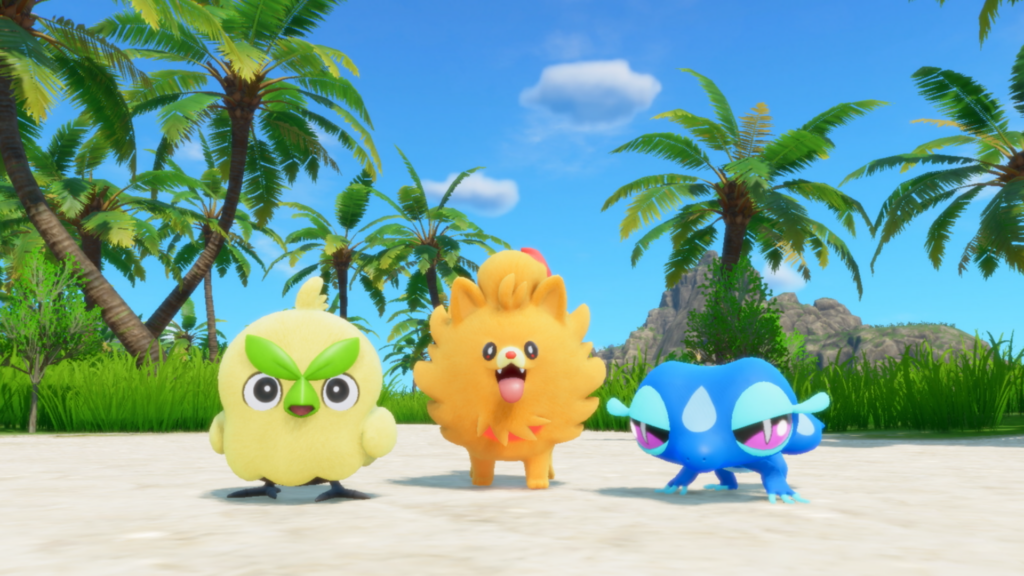
At the beginning of every mainline Pokemon game, the player is offered a choice of three Pokemon to begin their journey with. These are called Starter Pokemon. Starters always come in a trio representing Fire, Water, and Grass types. The choice of Starter is one of the most discussed topics in the fan community. There are passionate opinions about which Starter is best in every game.
Why it matters: Asking your child which Starter they chose and why is an easy way to start a conversation about the game they are playing.
Meta / Metagame
The ‘meta’ (short for metagame) refers to the dominant strategies, Pokemon, and team compositions used in competitive Pokemon at any given time. A Pokemon that is ‘meta’ is currently considered powerful or widely used in competitive play. The meta shifts as new games are released, new Pokemon are introduced, and players discover new strategies.
OP (Overpowered)
OP stands for overpowered. A Pokemon, move, or strategy that is considered unfairly strong relative to others. This is common gaming slang used across many games, not just Pokemon.
Dex
Dex is shorthand for Pokedex. When your child says they are ‘working on their Dex’ or asks if a Pokemon is ‘in the Dex,’ they are referring to the Pokedex and the process of completing it.
Box (PC Box)
The PC Box (or just ‘Box’) is in-game storage for Pokemon that are not in the player’s active party of six. Players can store up to hundreds of Pokemon in Box slots. Managing the Box is a normal part of the game, and players often have boxes full of Pokemon they have caught but are not currently using.
Teraleak
The Teraleak refers to a significant 2024 data breach at Game Freak that exposed internal development documents, including a roadmap of planned Pokemon games through 2030. The leaked information included details about Generation 10 (tentatively titled Winds and Waves, projected for 2027) and a potential multiplayer-focused Pokemon title. The information is considered credible by the fan community but is unconfirmed by The Pokemon Company.
Why it matters: If your child mentions the Teraleak, they are referencing this leaked roadmap. It is widely discussed in the Pokemon community.
Engaged Family Gaming | engagedfamilygaming.com
This glossary is a living document. As new games and terminology emerge, it will be updated. Last reviewed February 2026.
About The Author