Cozy games are not a new advent in video games. For nearly as long as developers have dedicated their time to strategy, war games, and first-person violence, they’ve also been creating experiences dedicated to creativity, cultivation, and connection.
A Brief History
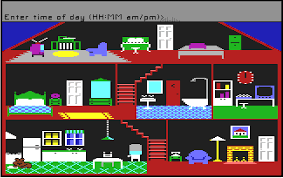
The first “cozy” game (at least in terms of mechanics) was 1985’s Little Computer People, one of the first life simulator games. Derby Stallion, released in 1991, is widely thought to be the precursor for what would become one of the biggest cozy franchises in video games: Harvest Moon; the first Harvest Moon came out in 1996. If farming wasn’t your vibe, you could trek through the esoteric puzzles in Myst, which came out in 1993. The Sims, a life simulator series first released in 2000, has become a mainstay of cozy gaming in the 25 years since its first game.
Cozy and “wholesome” games have a long and storied history, but games that eschew the more “traditional” genres (FPS, strategy, sports, RPG, and/or action) have often been relegated to bargain bins, both literally and figuratively. There was (and still sometimes is) a lack of understanding about the importance of non-violent, cozy, and wholesome games for an entire subset of gamers who don’t want a murderfest every time that they play a game.
The Indie Games Renaissance
The changing landscape of game development has paved the way for developers to experiment with genres that larger video game publishers had no interest in. Gone were the days when a developer needed a publisher in order to get their game out to the public. Platforms like Steam and itch.io have enabled developers to take control of their art in ways that weren’t possible before.
As these changes to a more egalitarian game development environment, where developers had more control than ever, rippled out, we began to see the roots of what is usually referred to as the indie game renaissance. Indie game developers, those studios that weren’t owned (or published by) the largest companies in video games, took the stage en masse starting in 2011 and really haven’t stopped since.
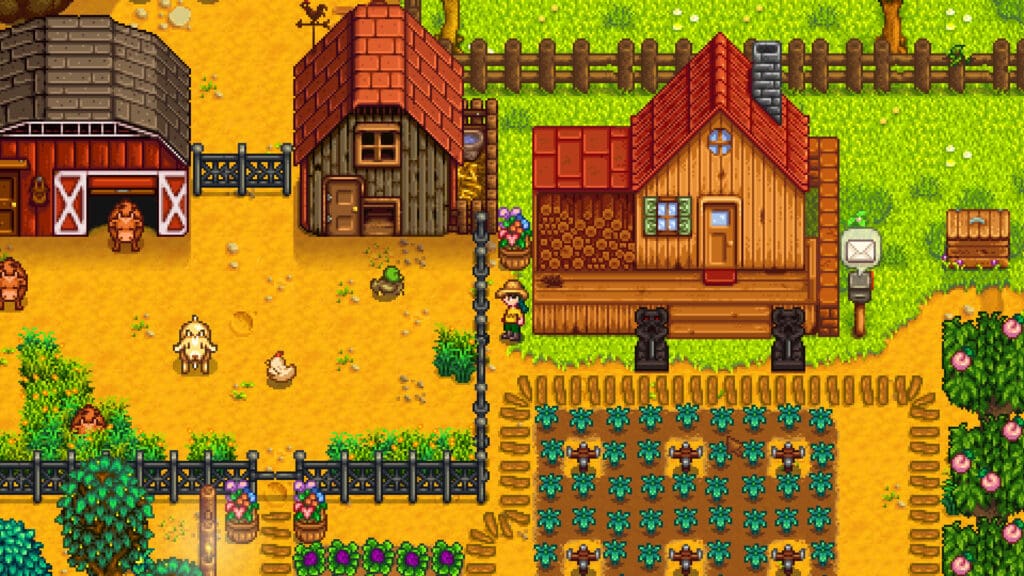
With indie game developers enjoying this much-deserved spotlight, we began to see more and more games that catered to players who weren’t nearly as interested in murder and mayhem. Some experimented with the blending of the life simulator we loved in Animal Crossing and the farming simulator we’d come to love in Harvest Moon (now Story of Seasons), which gave us the wildly successful Stardew Valley. Stardew Valley’s meteoric rise, in turn, served as inspiration for the inbound generation of cozy game developers.
While the indie game renaissance was certainly fertile ground, the “perfect” incubator for what would become the cozy game renaissance wouldn’t come about until a new, deeply infectious (and deadly) respiratory virus would bring the entire world to a grinding halt.
COVID-19 and the Cozy Games Renaissance

It’s hard to believe that the beginning of the global COVID-19 pandemic was half-a-decade ago, but its impact has been felt in nearly every facet of our lives, as well as all over the video game industry. When we were actively sheltering in place in 2020 (through 2021’s COVID-19 vaccines), the game industry was at a standstill with its regular convention circuit. At the conclusion of PAX East in 2020, each other game convention and conference was cancelled, leaving players and developers in a tough spot.
The cancellation of these events made way for new experiences, including the very first Wholesome Direct, which aired in May 2020. At the time, Wholesome Direct was just a showcase, giving players a chance to connect with non-violent, cozy, and wholesome games in a way that had never been presented before. With the first Wholesome Direct, and its incredible success, cozy players (like me) began to see a world in which our games were taken more seriously, leading to more opportunities for developers and players alike.
Since its founding in 2019, Wholesome Games is not just the Wholesome Direct (the summer showcase aired around Summer Games Fest in June) or the Wholesome Snack (the winter showcase aired around The Game Awards in December). It’s also a hybrid approach to publishing and marketing that was built, quite literally, on the shared love of cozy and wholesome games.
Matthew Taylor and his brother, James Tillman, co-founded the company together as they were working on their own game, Rolling Hills: Make Sushi, Make Friends (published by Humble Games in 2024). The duo has since expanded their team to include: Jenny Windom, a host of the Wholesome Direct, video game producer (Spirit Swap, Wanderstop, and more), consultant, cozy streamer, and former video game PR human; and Victoria Tran, one of the foremost experts on community development and management in video games, as well as the head of marketing at Among Us’ Innersloth. Jacob Blommestein was an original member of the Wholesome Games crew, but has since moved onto working with the good folks at KO_OP Mode making indie video games.
Wholesome Games has served as a marketing lifeline for cozy game developers, as well as a regular community hub for cozy game players. Their Discord server is always hopping. Their showcases are a hotly anticipated balm for the far more violent game showcases that pop up during Summer Games Fest, Gamescom, and The Game Awards.
And now that cozy game developers can point to Wholesome Games’ successes as an indication of cozy gaming’s staying power, publishers have become far more keen to find the next Unpacking, A Short Hike, or Coral Island.
As a result of that, cozy game players have been treated to an immense wealth of games that have encouraged us to connect, create, and collaborate in new and beautiful ways.
The Future of Cozy Gaming
Since 2020, there have been nearly 1200 cozy games released on Steam, generating somewhere around $160m in revenue, according to Games Stats. The most popular of these, PowerWash Simulator, has generated around $23m in revenue since its release in 2022. In addition to the games themselves, there are thousands of influencers and streamers that exclusively play cozy games like Stardew Valley and PowerWash Simulator for their wide array of audiences. Some play through whatever new cozy releases are making the rounds (variety streamers) and treat their communities to something shiny on a regular basis.
Cozy gaming has never been bigger and it’s also never been more approachable.
While there’s certainly still a need for educational entertainment (edutainment) in video games, cozy games offer a road into more “mainstream” gaming in a way that allows parents to take a deep sigh of relief that their child(ren) will not have to wade through the oft-times nebulous new release schedule to find a game that’s “appropriate”.
For example, Unpacking, published by Humble Games in 2021, has provided each of my family members with memorable experiences that they still sometimes talk about. Even those “non-gamers” in my family have found something to love in Unpacking. We’ve all moved. We’ve all unpacked boxes. There’s something very special about that universal relatability.
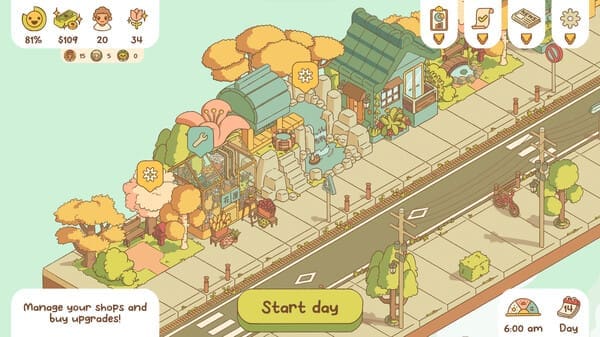
The last year alone has given us incredible cozy games like Tiny Glade, Is This Seat Taken?, Tiny Bookshop, Little Kitty Big City, Spirit Swap, and Duck Detective. There are even more on the horizon.
The Cozy Games Train is chugging along now and there doesn’t seem to be any stopping it. (Happily!) Wholesome Games may not be wholly responsible for this cozy games renaissance, but their dedication to highlighting cozy and wholesome games has created a benevolent cycle that benefits developers and players alike, both expanding interest in, and creating a foundation for, the future of what cozy games could become in the years to come.
About The Author