
What is STEM and STEAM?
The terms STEM and STEAM, often listed as STE(A)M are used in and outside of the educational setting. STEM stands for Science, Technology, Engineering, Math. STEAM adds Art. The term STEM first emerged in 2001 by the National Science Foundation (NSF). Art was added to STEM in 2006 by Georgette Yakman. She recognized the importance of the Arts and creativity within all of the STEM fields, and how it is incorporated through writing, creating, designing, and maybe even some whimsy. STE(A)M based teaching, program, activities, and games recognize the importance of the subjects as well as how they are connected. There are many benefits to developing skills withing the subjects of STE(A)M. These skills include foster creativity, increase student engagement, develop skills in the content areas as well in functional skills (such as problem solving, collaboration, presenting).
The different components of STE(A)M are rarely stand alone. Often in a game, activity, project, etc. that is STE(A)M at least two are present.
STE(A)M Focused games from Publishers
There are a few publishers who have focused on STEM games, and quite a few games are featured below. However, there are many more games they have made than will be featured.
Genius Games, makes games and puzzles using accurate science principles.
Thinkfun which is a part of Ravensburger has a huge range of games in their catalogue. They have quite a few STEM games as well as other games to support learning at all ages.
Science
The sciences are the first component of STE(A)M. Typically, these include Chemistry, Biology, Physics, and Earth Science. There are many resources our there for STE(A)M focus on Physics, but all Sciences are a part of this.
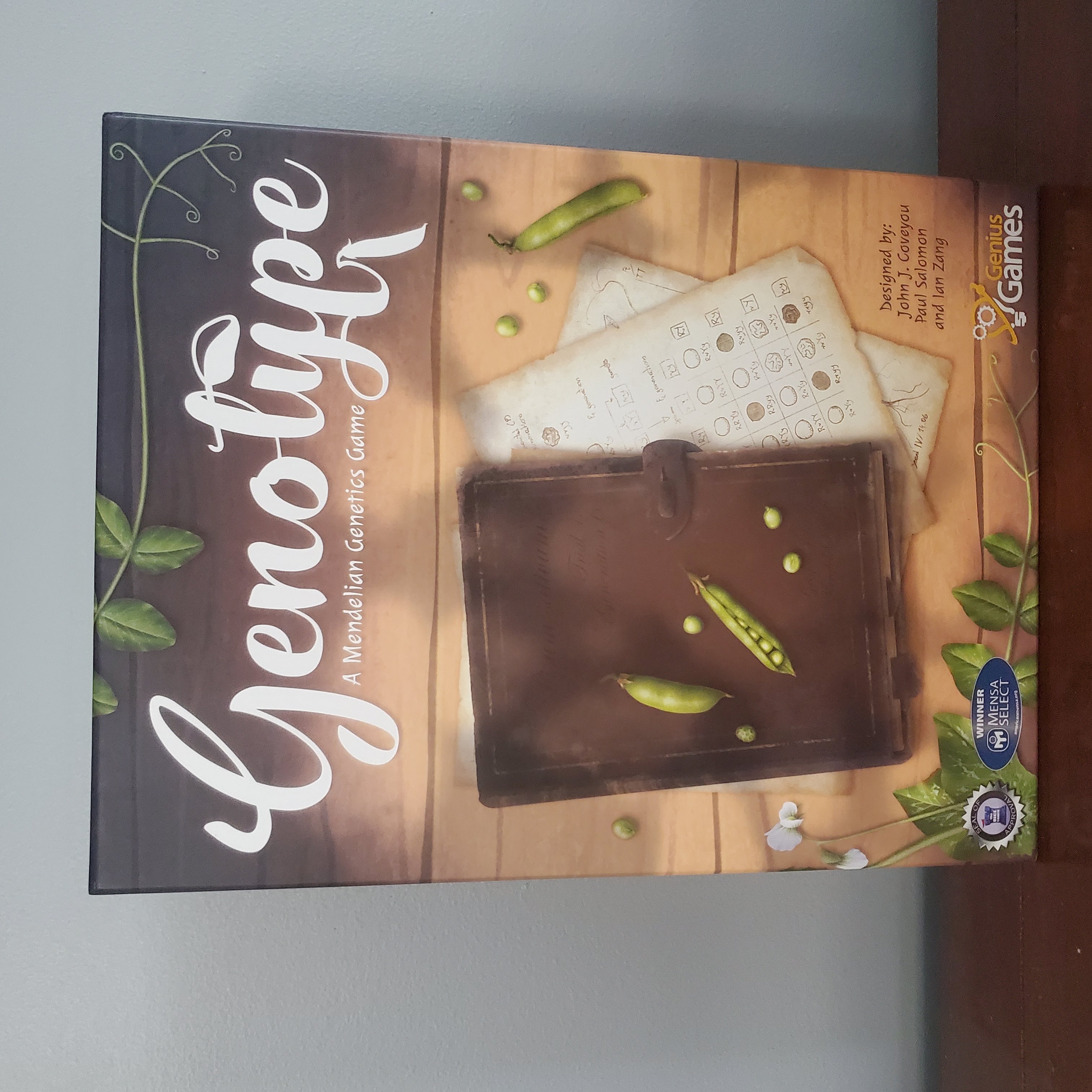
Genotype
- Player Count: 1-5
- Age: 14+
- Play Time:45-90 minutes
- Publisher: Genius Games
- Buy Genotype here on Amazon
Genotype takes the mechanics of dice drafting and worker placement and sets the players in St. Thomas’ Abby with Gregor Mendel. With beautiful illustrations that bring you right to the time period. Players delve into the Punnett Square and genetics of the pea plant.
Ion

- Player Count: 2-7
- Age: 8+
- Play Time: 20-30 minutes
- Publisher: Genius Games
- Buy Ion here on Amazon
Ion is a card drafting and set collection game where you are tying to collect cards to build either neutrally charged compounds or sets of stable noble gases. With a lot of chemistry principles build into this game it can introduce the concepts or reinforce them with the players.
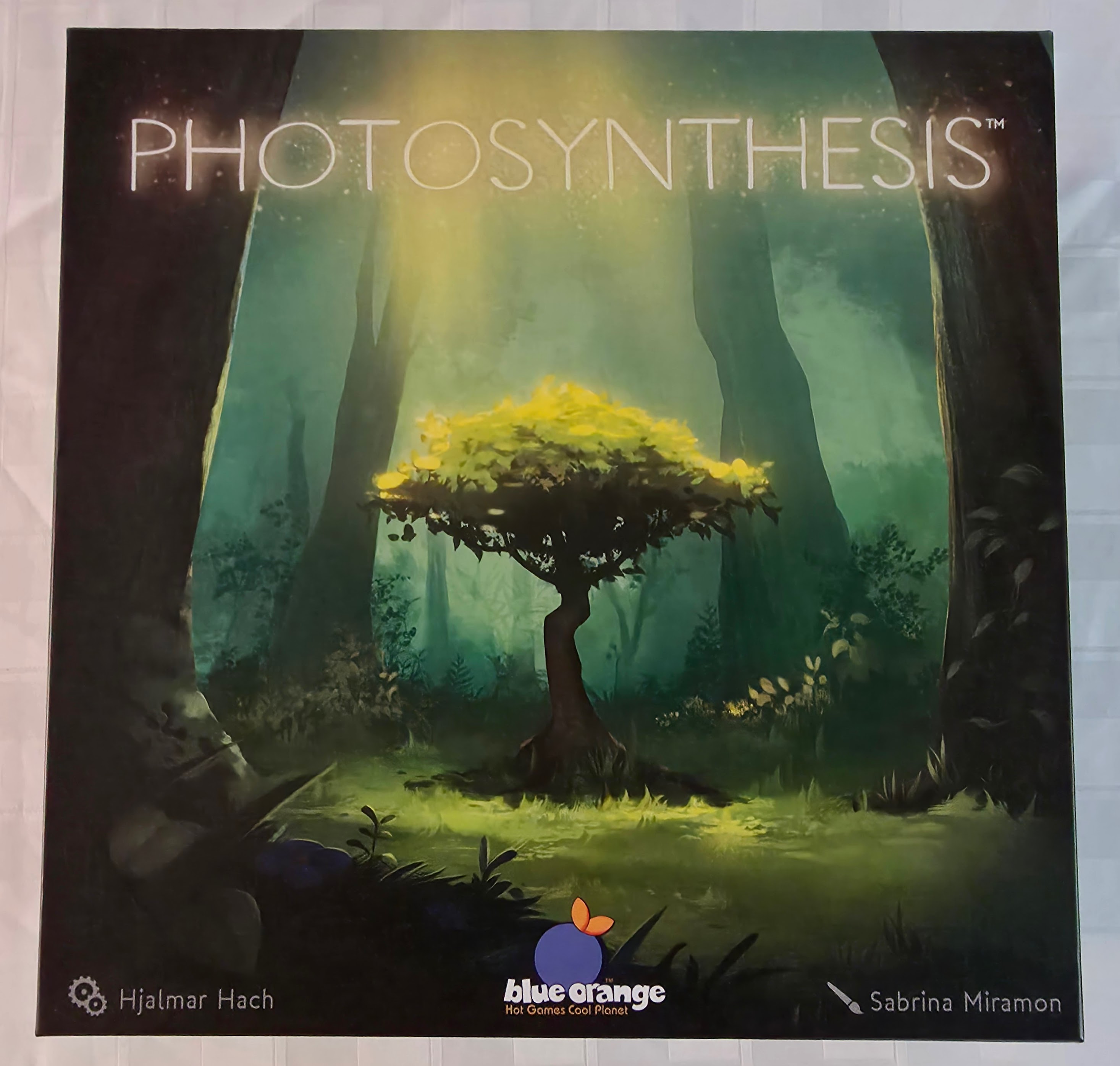
Photosynthesis
- Player Count: 2-4
- Age: 8+
- Play Time: 30-45 minutes
- Publisher: Blue Orange
- Buy Photosynthesis here on Amazon
Go through the life cycle of trees from seed to rebirth. Light points are used to grow your trees, but be strategic on where you place the trees, the more valuable spots have the greatest chance of getting the light blocked. Besides being a beautiful game, there is science integrated into many aspects of the game.
Technology
Technology is integrated into other elements of STE(A)M, especially Engineering and Science. In the board game world, some of those aspects can be incorporated into a game and some are making a link to technology in an abstract way.
Rocket Lander

- Player Count: 2
- Age: 7+
- Publisher: Griddly Games
- Buy Rocket Lander here on Amazon
A strategy game encouraging problem solving and critical thinking, Rocket lander is played in three steps. First players roll and plot on the X, Y, Z coordinates. Next, they strategies and connect. Players in this step land their rockets and form clusters. Finally, players score. It has a technology theme, and the game incorporate other STEM elements.
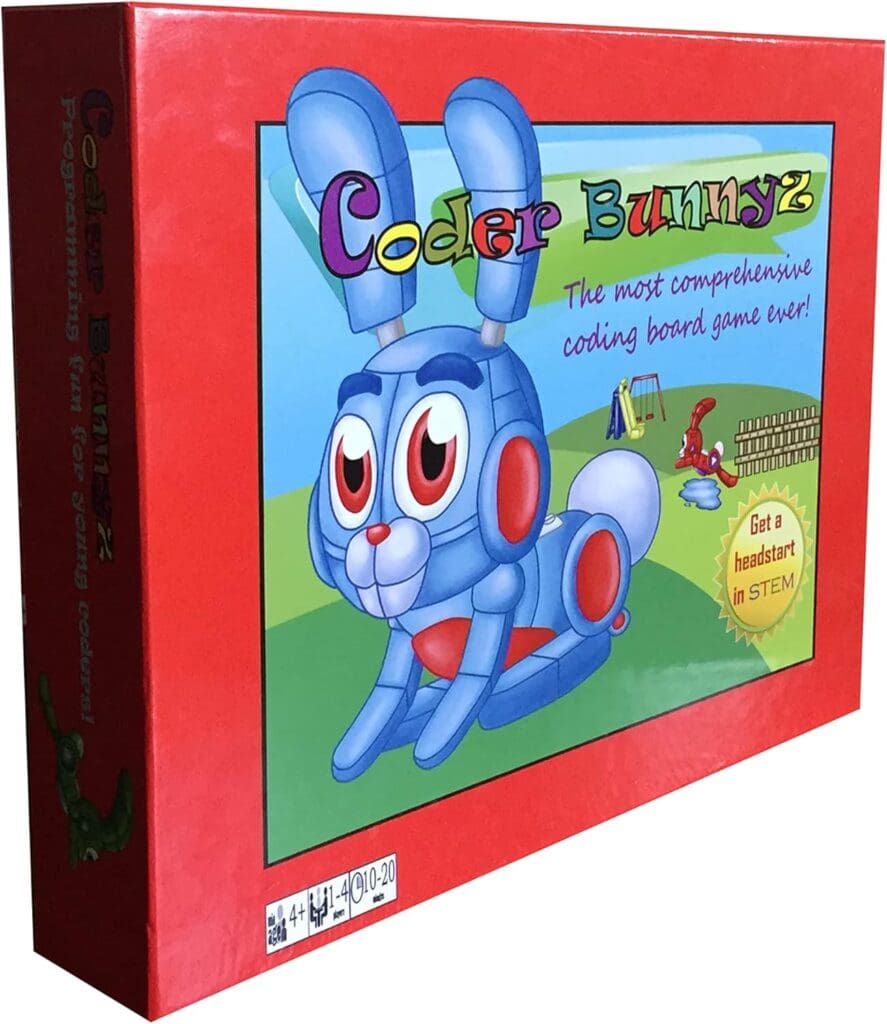
Coder Bunnyz
- Player Count: 1-4
- Age: 4+
- Play Time: 10-20 minutes
- Publisher: Coder Bunnyz
- Buy Coder Bunnyz here on Amazon
Coder Bunnyz introduces the basics of coding in a friendly and accessible format. Players new to coding benefit from coaching and direct instruction on the best way to program the motion of their bunny. More advanced players can create greater challenges with the board layout to refine their strategic thinking and problem-solving skills.
Having thirteen variants of play included within the four basic levels allows the game to scale with the age and skill level of the players. This makes it challenging and engaging for players of all levels.
Laser Maze
- Player Count: 1+
- Age: 8+
- Publisher: Thinkfun
- Buy Laser Maze here on Amazon
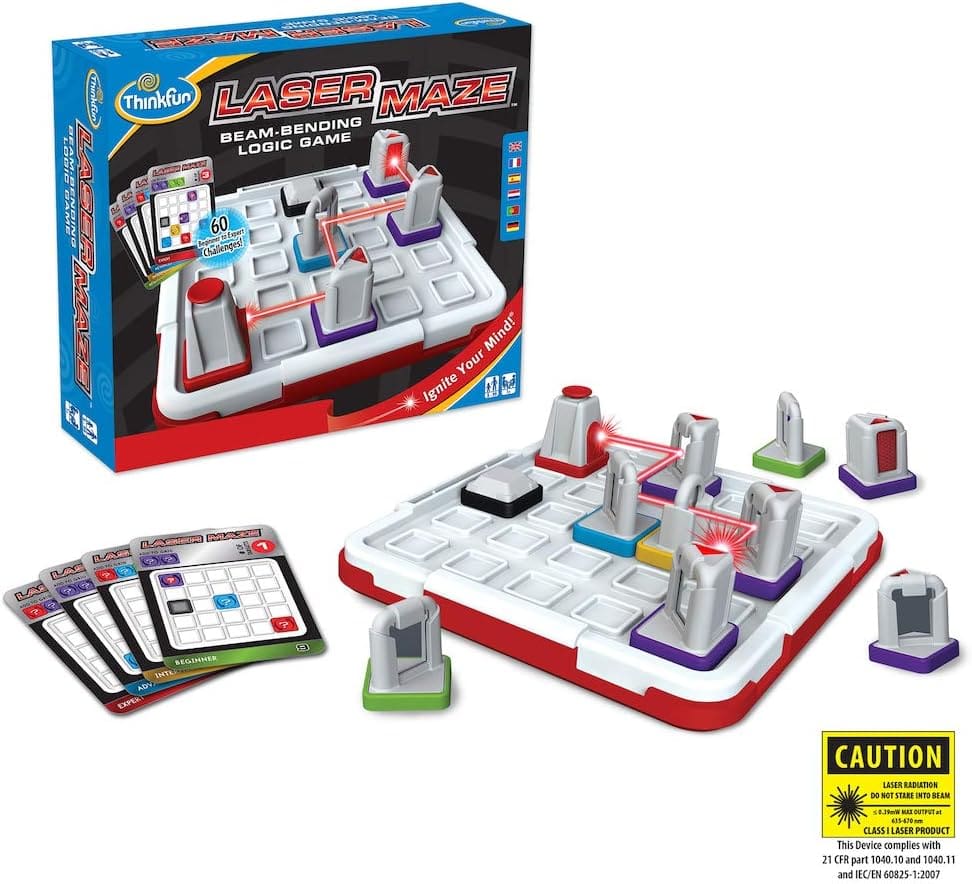
Laser Maze is a puzzle challenge game where you have 60 challenge cards with increasing difficulty. The objective is to use the mirrors to direct the laser to a goal point using the resources listed on the card and working with the obstacles. Laser Maze promotes problem solving and flexible thinking. Directing the light also is reminiscent of fiberoptic cable, which also links it to real world applications.
Engineering
The core of STE(A)M is engineering. It can incorporate all the other components of STE(A)M to create and build. The games below plus many more dexterity games include engineering principles.
Gravity Maze
- Player Count: 1+
- Age: 8+
- Publisher: Thinkfun
- Buy Gravity Maze here on Amazon
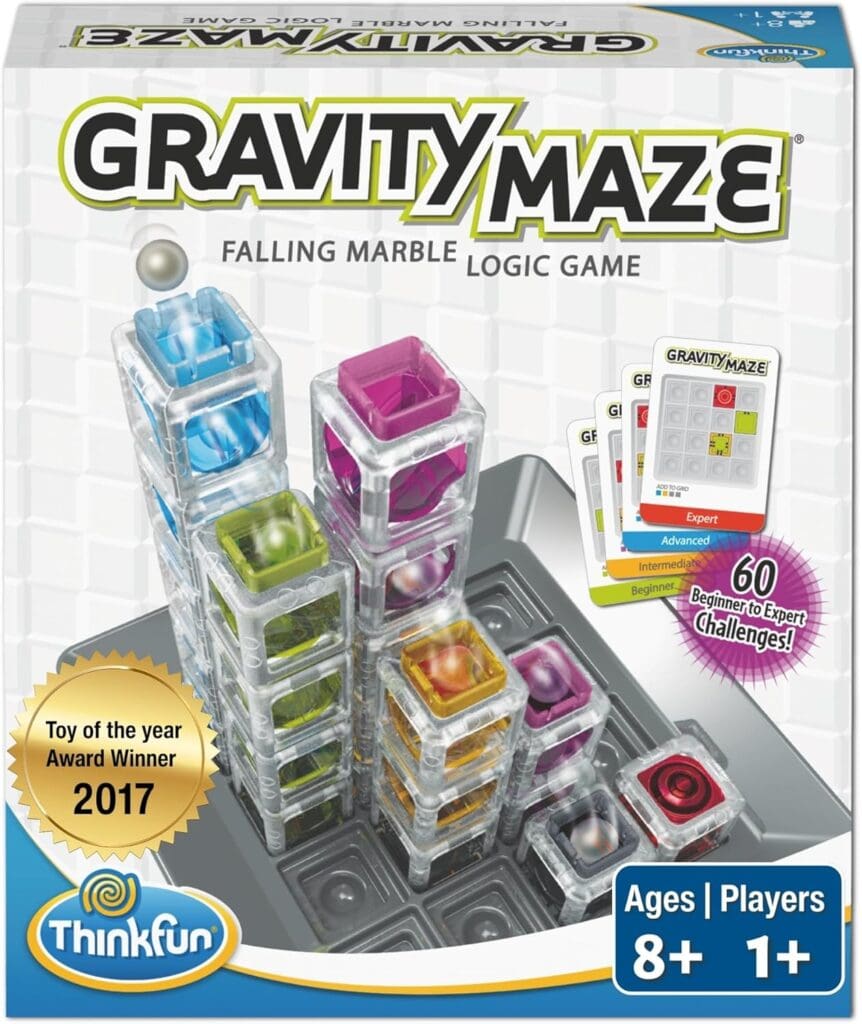
Gravity Maze is a logic game where players use problems solving to solve a series of 60 challenge cards. As with Laser Maze the cards increase in difficulty. With 9 towers, 3 marbles, a game grid, and a target piece there a so many ways to have to move the marble to the target. This exemplifies engineering and having to build to solve the problem of moving an object to a designated point.
Gravity Maze was also a Toy of the Year Award winner in 2017, and they won in the specialty category.
Circuit Maze
- Player Count: 1+
- Age: +8
- Publisher: Thinkfun
- Buy Circut Maze here on Amazon
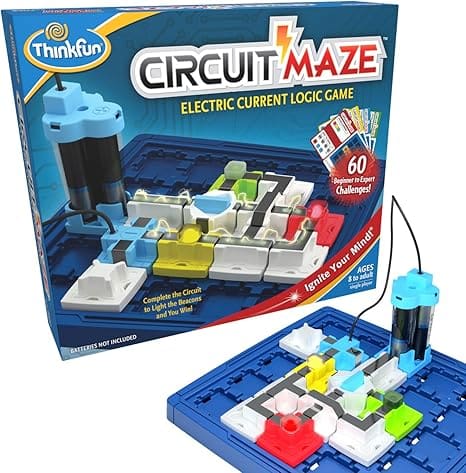
Players are challenged to complete the circuit to light the beacon in Circuit Maze. Given a certain layout and pieces, the challenges increase over the 60 challenge cards. The basics of circuitry are explored through this game as well as utilizing the skills of planning and problem solving.
Roller Coaster Challenge
- Player Count: 1+
- Age: 6+
- Publisher: Thinkfun
- Buy Roller Coaster Challenge here on Amazon
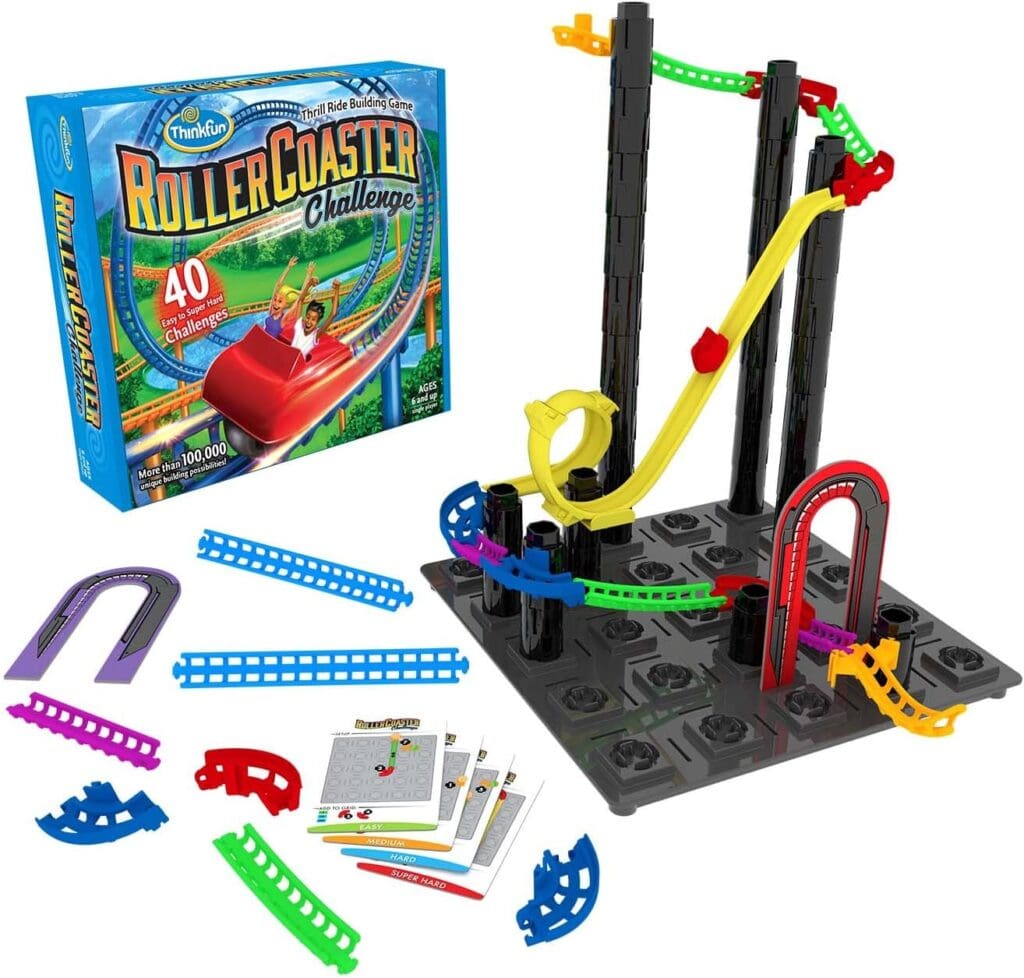
Players of Roller Coaster Challenge take on the role of figuring out how to create a roller coaster to meet the specific elements and directions provided. With 40 challenge cards, each one just a little harder, it gets players to use problems solving, creativity, and perseverance to succeed.
Art
Creativity is essential to STE(A)M and everything from designing, writing, to construction is an Art. The problem solving that exists in the arts can translate into all other STE(A)M areas.
Color Field
- Player Count: 2-4
- Age: 10+
- Play Time: 20-45 minutes
- Publisher: 25th Century Games
- Buy Color Field here on Amazon
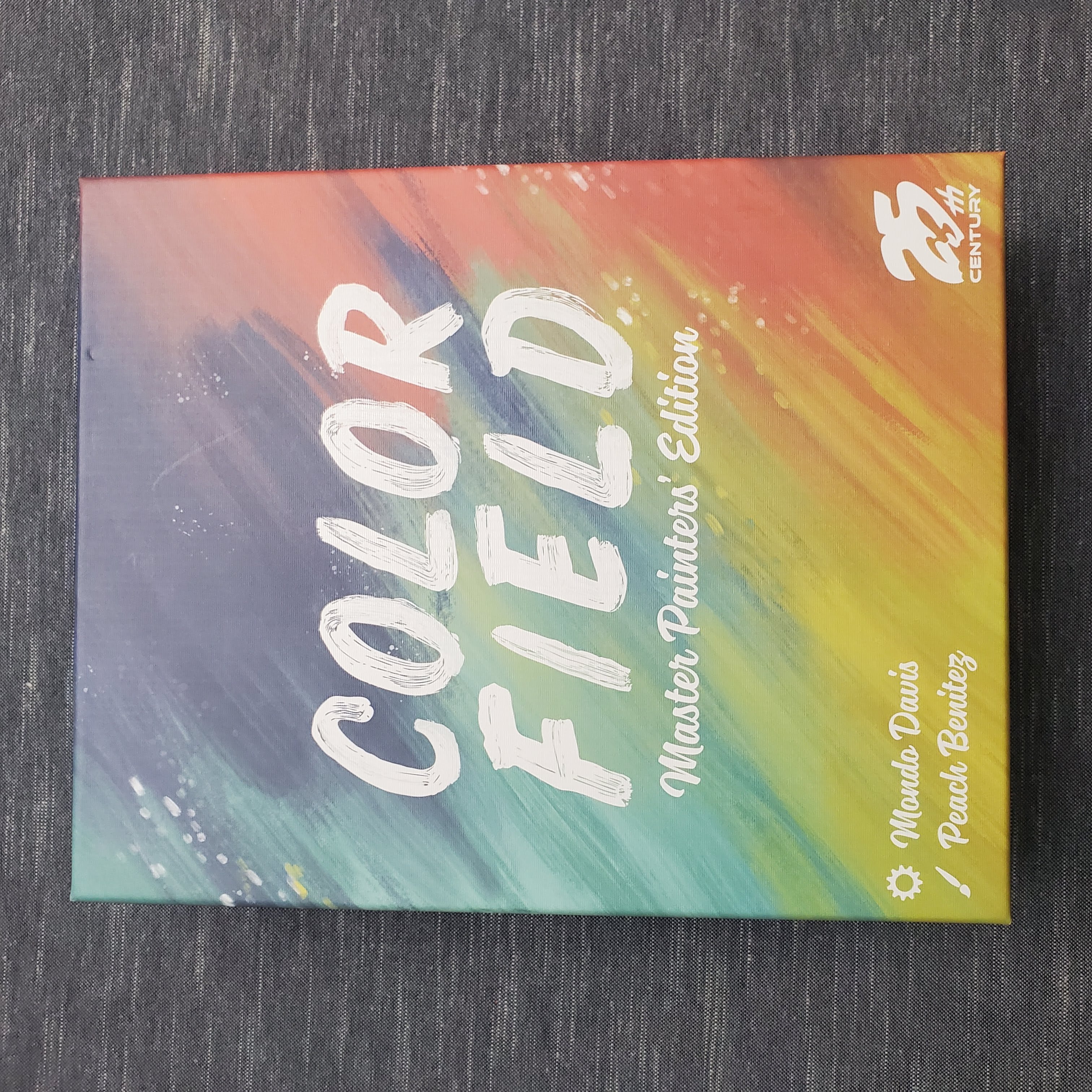
Color Field is a tile laying game where you play over three rounds to complete your three paintings. Players try to score the most points based on matching colors to other tiles or the perimeter of your Canvas Board. The game incorporates color matching and creativity. There is also a math component incorporated into the scoring. The scoreboard is a 120 chart just like is used in elementary school math.
Chiseled
- Player Count: 1-4
- Age: 14+
- Play Time: 30 minutes
- Publisher: Copper Frog Games, Grand Gamers Guild
- Buy Chiseled here on Amazon
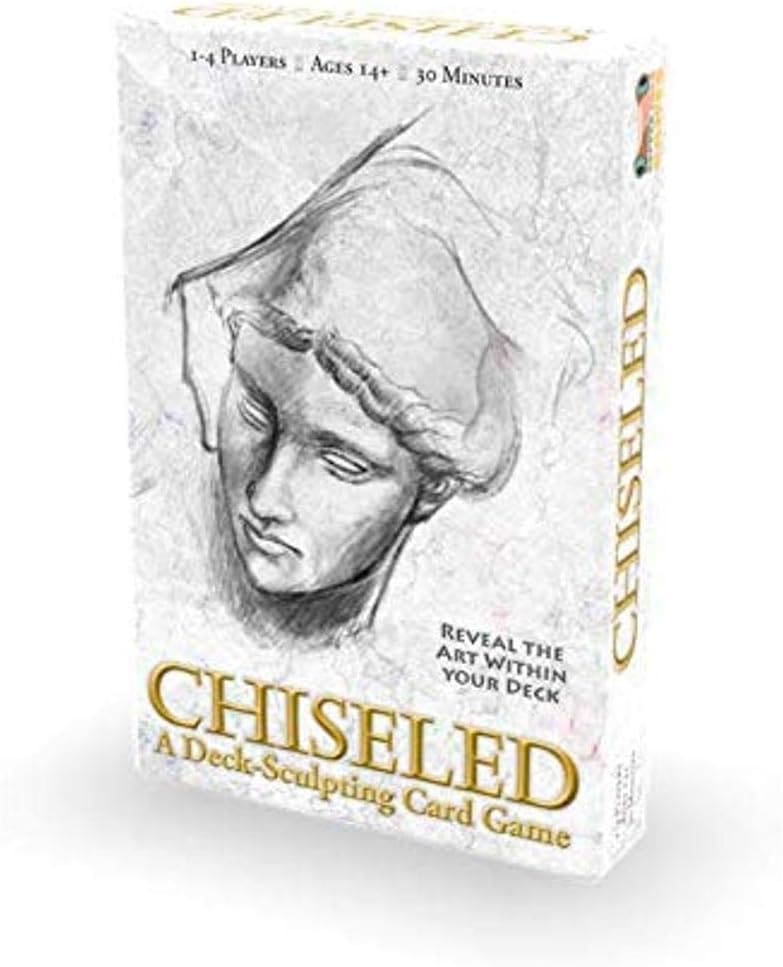
Chiseled is a deck deconstruction game, where players are trying to get scraps and unnecessary cards out of their hand. The objective it to have a sculpture to please the critics and can score the most points. This ties into the art of sculpting by having different types of stones and stone working tools to modify your deck.
Canvas
- Player Count: 1-5
- Age:14 +
- Play Time: 30 minutes
- Publisher: R2i
- Buy Canvas here on Amazon
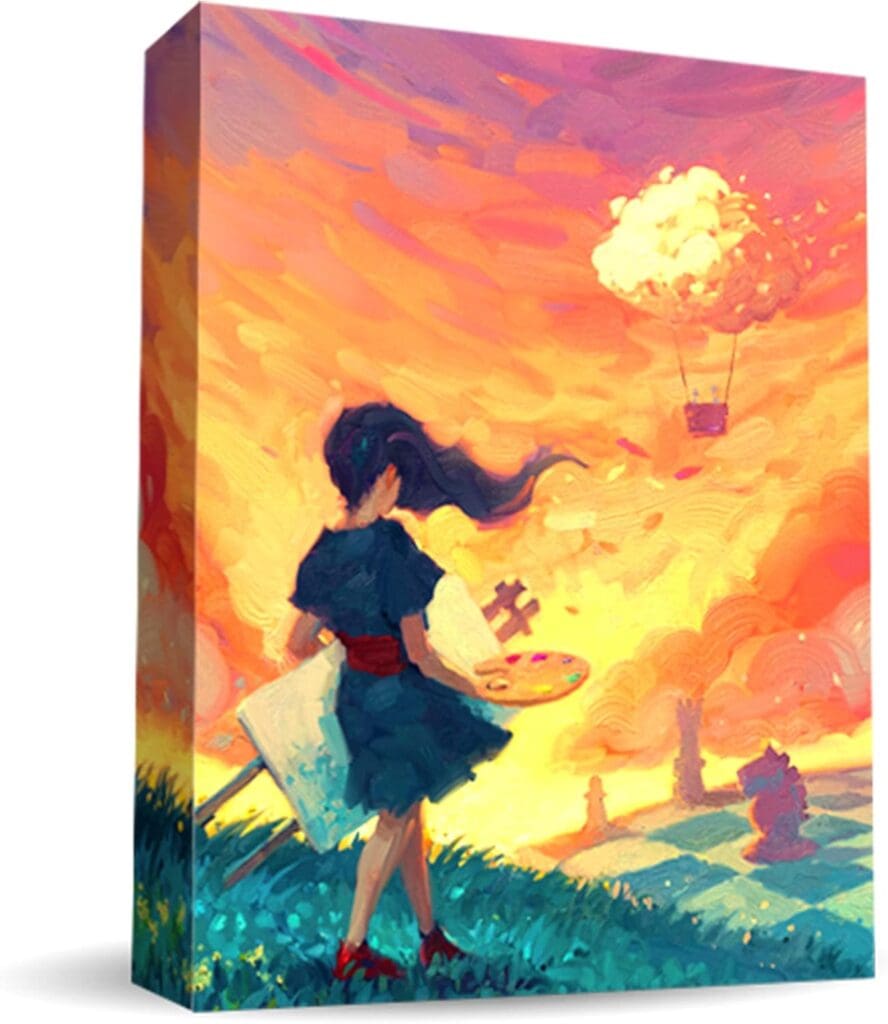
Take on the role of an artist to create works of art in a competition. Players are layering three cards per work of are to cover or reveal to earn points. With a mix of set collection and hand management to keep the game interesting, players will also need to balance esthetic with strategy to earn the most points.
Math
Math is a component of STE(A)M that has the potential to unify all five pillars. Whether is it computation, measuring, or data analysis. There is math interregnal to so many STE(A)M projects.
Genius Square
- Player Count: 1-2
- Age: +6
- Play Time: 30 minutes
- Publisher: The Happy Puzzle Company
- BuyThe Genius Square here on Amazon
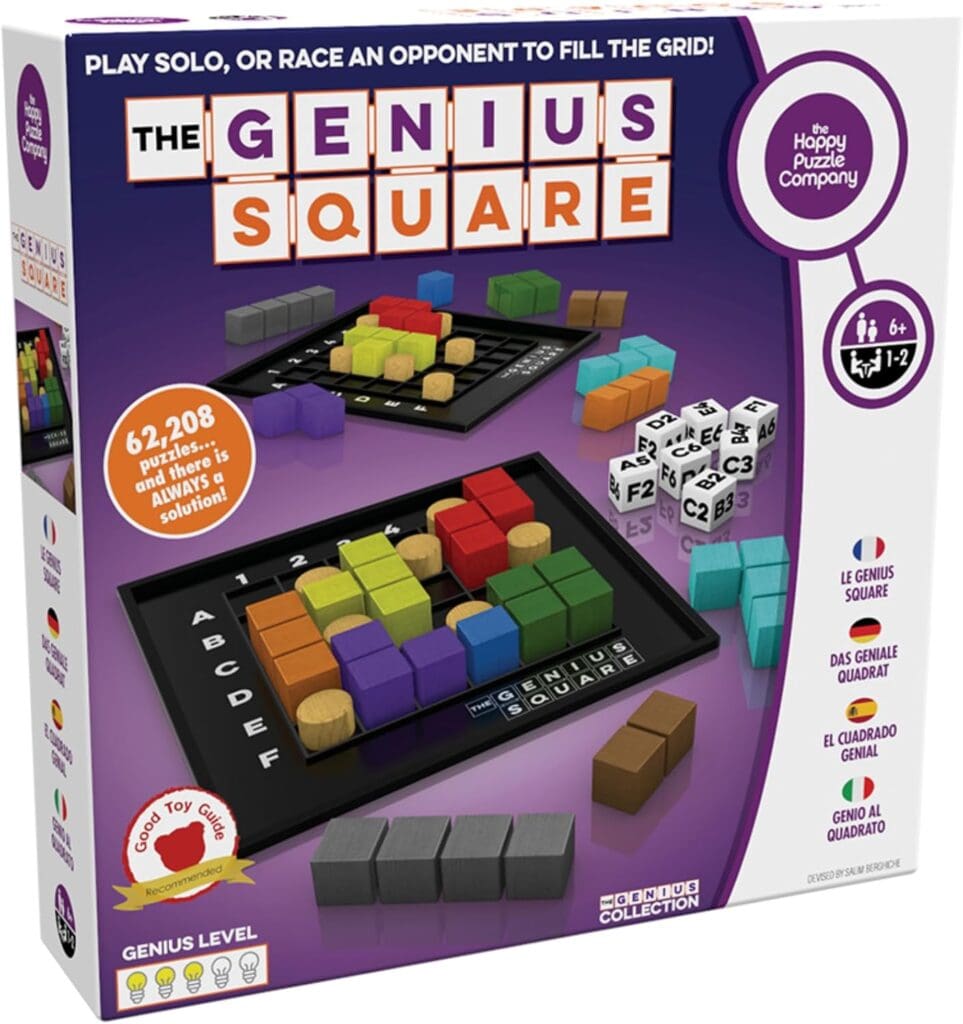
Players have to use problem solving skills, spatial relationships and strategic thinking skills to complete this puzzle game. There are so many variations to the challenges some with only one solution and some with multiple.
Dragonwood
- Player Count:2-4
- Age: 8+
- Play Time: 20 minutes
- Publisher: Gamewright
- Buy Dragonwood here on Amazon
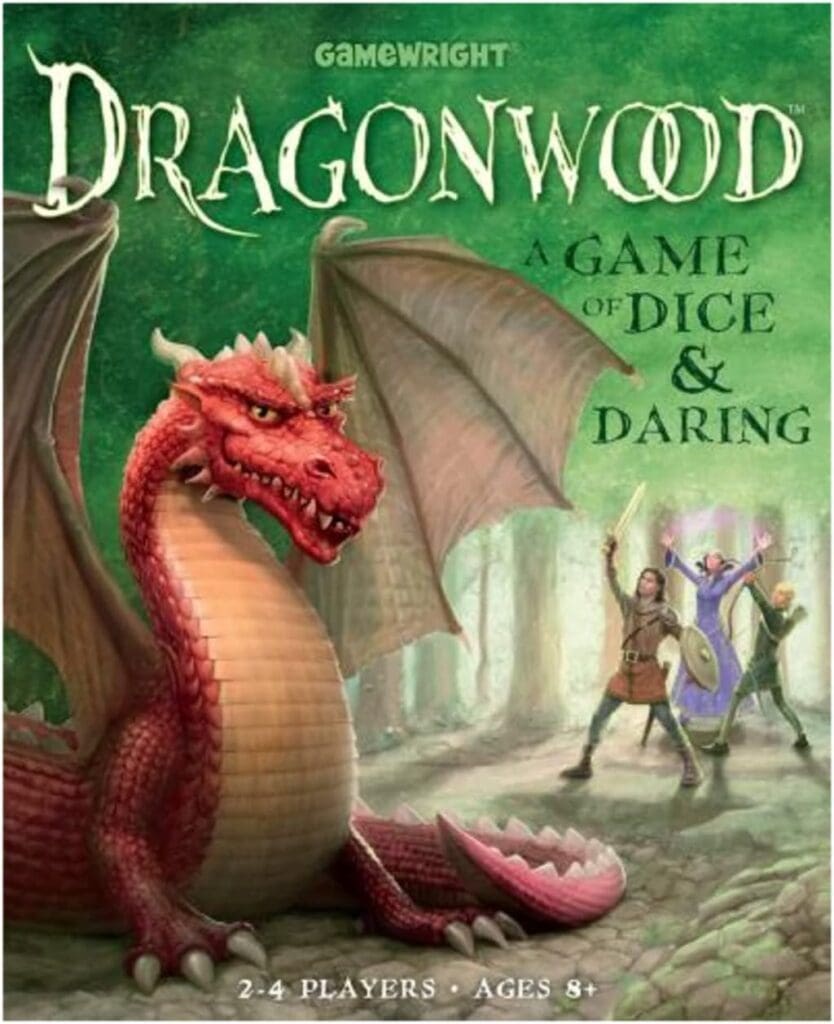
Players take on the role of adventures in Dragonwood Deep trying to collect enhancements or defeat monsters. With a mix of set collection and dice rolling, players collect cards to perform one of three actions. The card combinations collected determine the action that can be taken. Players can Strike if they have cards in a numerical row regardless of color. Stomp if their cards have the same number. Finally, Scream of they have cards of the same color. Each monster or enhancement has different goal number to role to win depending on the type of attack. To defeat a monster or acquire an enhancement, player roll the number of dice corresponding to the number of cards in their set. The six-sided dice only have the numbers 1-4 printed with 2 twos and 2 threes. Players develop their addition skills as well as probability skills as they play.
Math Fluxx
- Player Count:2-6
- Age: 8+
- Play Time: 30 minutes
- Publisher: Looney Labs
- Buy here on Amazon
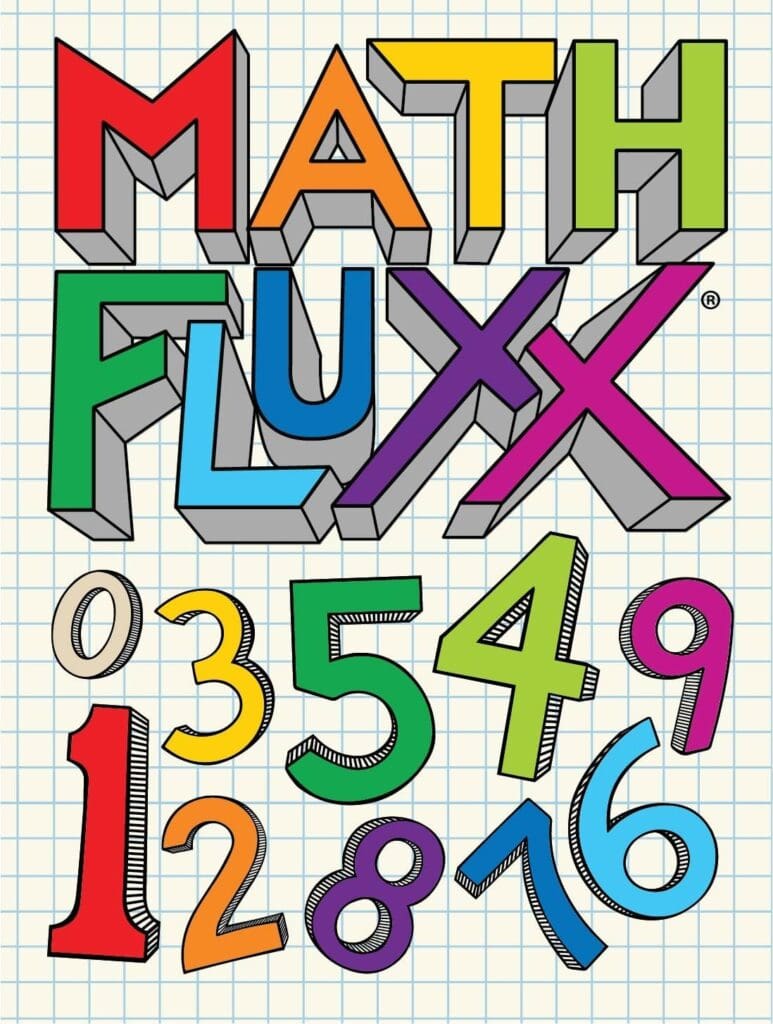
Like other games in the Fluxx series, the rules keep changing as you work towards your goal. It has the simple game play of draw a card, take a card. It utilized the four basic operations addition, subtraction. multiplication and division. Can you use the right combination of numbers to reach your number goal first?
While these are such a small sample of games in each of the fields of STE(A)M there are many more out there as well as new games coming out every year. There are educational themed games specifically for student, and many games that have STE(A)M incorporated and teaching or developing the skills and strategies is not the focus. Regardless of if your goal it to have a game with a strong intentional STE(A)M theme, or something with aspects incorporated as an additional feature, there are many games out there depending on what you are looking for.
About The Author